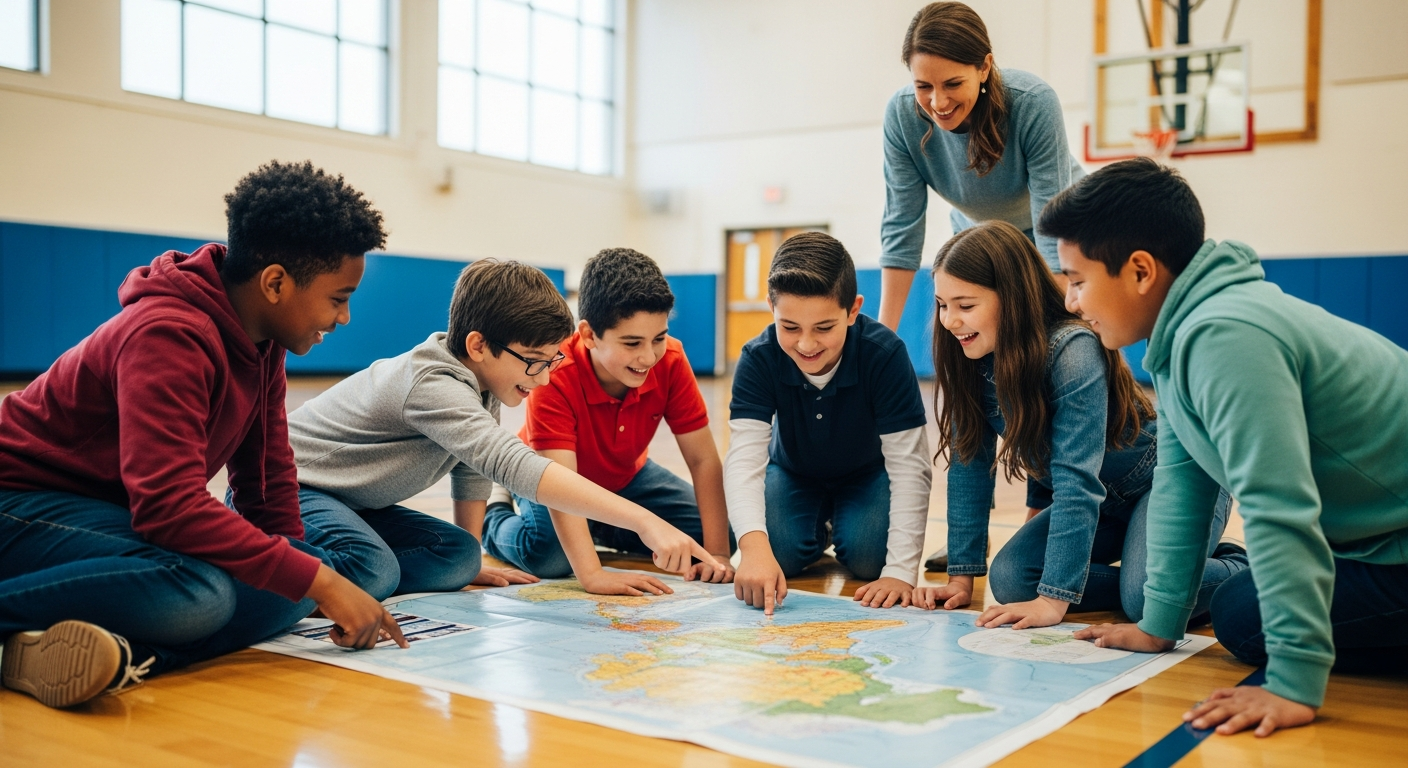

A parent pulls their child aside after school, asking, 'What did you actually do in class today?' If the answer is 'we played with the AI,' a wave of anxiety often follows. This reaction is not born of a hatred for technology, but from a fundamental desire to protect the integrity of the learning process. As AI becomes an increasingly common fixture in our schools, the gap between what happens in the classroom and what parents understand about those tools is widening. To bridge this divide, educators must shift from passive adoption to active, transparent communication about how artificial intelligence serves the curriculum.
How can schools effectively communicate the role of AI to concerned parents?
Schools build parent trust with AI by framing technology as a pedagogical scaffold rather than a replacement for teacher-led instruction. Instead of focusing on the 'intelligence' of the software, emphasize how AI-generated simulations and interactive modules align with state standards and learning objectives that parents already recognize.
Transparency begins with vocabulary. When parents hear 'AI,' they often think of generative chatbots that might hallucinate information or automate critical thinking. When you describe the tools in your classroom, use language that ties the technology back to proven educational frameworks. For instance, if an AI-powered tool creates a 3D history simulation, explain it as a tool for deepening inquiry, similar to how a traditional textbook offers a map. Frame the AI as the engine, but the teacher as the pilot who validates the content, ensures its accuracy, and integrates it into a lesson that prioritizes authentic understanding over rote memorization. Transparency is not about explaining the technical architecture of a model; it is about explaining the pedagogical intent.
What are the most common misconceptions parents have about AI in the classroom?
Parents often fear that AI tools prioritize speed and engagement over deep, mastery-based learning, viewing these programs as 'dopamine loops' that distract rather than educate. Address this by showing examples of how AI-driven simulations encourage students to iterate on ideas, test hypotheses in safe environments, and reflect on their failures—concepts that directly support the Zone of Proximal Development.
Many parents are concerned that AI will reduce the classroom to a series of mindless drills. To counter this, share evidence of how the software you use promotes higher-order thinking skills, such as those categorized in Bloom's Taxonomy. If an AI tool allows a student to run a simulation on ecological systems, explain that the goal isn't just to 'complete the game,' but to demonstrate an understanding of variables and outcomes. By showcasing work that requires students to synthesize information or solve complex problems, you differentiate your classroom from the 'gamified' apps that rely on speed-based rewards or superficial engagement. When parents see that the technology is a vehicle for rigorous, authentic learning, the mystery—and the fear—dissipates.
Is it possible to use AI while maintaining a 'human-in-the-loop' approach that parents value?
Yes, maintaining a 'human-in-the-loop' standard is the single most important factor in securing stakeholder trust. By explicitly documenting that every piece of AI-generated content is reviewed, curated, and contextualized by a qualified educator, you reassure parents that the human relationship at the heart of teaching remains the primary driver of the classroom experience.
This approach signals to parents that technology is a tool of the teacher, not a substitute for them. When you invite parents to review the materials—perhaps by sharing a 'teacher-reviewed' simulation or an interactive lesson plan that you have modified to fit your specific student needs—you are demonstrating that you remain in control of the learning environment. This validation process is an essential layer of professional accountability. It shows that you are not merely outsourcing instruction to an algorithm but are leveraging technology to expand the possibilities of what you can offer your students. When parents understand that the AI's output is always subjected to your professional judgment, their concerns regarding bias, accuracy, and age-appropriateness are significantly mitigated.
How does transparent AI education align with long-term learning goals?
Transparent AI education aligns with long-term learning goals by preparing students for a future where they must critically evaluate and interact with intelligent systems. Rather than hiding the use of these tools, treat their implementation as a case study in media literacy, showing parents how your instruction teaches students to question, verify, and apply the insights provided by AI.
As we prepare students for adulthood, the ability to work alongside AI will be a core competency. If we treat AI as a 'black box' that we hide from parents and students alike, we miss an opportunity to teach students how to be masters of their tools rather than passive consumers of them. Talk to parents about the 'why' behind the tech. If you are using a simulation to teach physics, explain that the AI allows students to experiment with gravity and motion in ways that were previously impossible to visualize. Connect this back to the broader goal of cultivating scientific literacy. When you frame AI as a means to achieve traditional, high-quality learning outcomes, parents move from being skeptical observers to supportive partners in the educational process.
Moving Forward: Building a Culture of Openness
Building trust is not a one-time event; it is an ongoing practice of openness. To start this week, consider creating a brief 'AI Transparency Statement' for your classroom. This doesn't need to be a technical document. It can be a simple, one-page guide that answers three questions: What tools are we using? Why are we using them to support learning? And how does the teacher ensure that what the students see is accurate and valuable?
When you invite parents to see the 'human' side of your digital classroom, you change the narrative from 'fear of the unknown' to 'excitement about the possibilities.' By focusing on pedagogical outcomes, insisting on human validation, and maintaining a commitment to authentic learning, you can demystify the technology that is transforming our schools. The goal is to ensure that when a student walks through the door after school, the answer to 'What did you do today?' is a story of discovery, critical thinking, and intellectual growth that parents can feel confident supporting.