The Argraide Blog
Insights on AI education, gamified training, and the future of learning.

Latest Articles

Chromebook Education: Rich Learning on Low-End Devices
Low-end Chromebooks can support rich learning when teachers design for cognitive work, not visual weight. Three research-backed tests reshape one lesson this week.

Four Myths About Storytelling in Educational Game Design
Story can clarify a hard decision—or bury the learning. Four myths about narrative learning and educational game design, with a practical audit for this week.

COPPA, FERPA, and MFIPPA: Four AI Privacy Myths to Drop
COPPA, FERPA, and MFIPPA do not create one universal AI rule. Learn which myths mislead schools—and the privacy checks educators can use this week with confidence.

Bloom’s Taxonomy and AI: Designing for Higher-Order Thinking
AI can label an activity “analyze” while students only recall. Use Bloom’s Taxonomy, evidence, and teacher judgment to design better thinking tasks this week.

Build a 2030-Ready Classroom Lesson With an AI Copilot
A practical playbook for turning one lesson into a teacher-owned adaptive pathway, with guardrails for AI copilots, privacy, and evidence of understanding.

A Principal AI Guide to Evaluating AI Tools in Schools
A practical principal AI guide for evaluating classroom tools against learning goals, teacher workload, student agency, and evidence before school-wide adoption.

Four Myths About Parent Trust in Classroom AI Tools
Parent trust in AI grows through plain-language notices, meaningful choices, and honest limits—not polished promises. A practical guide for school leaders.

Why Speed Kills Student Confidence in the Classroom
Mastery learning builds resilience by shifting the focus from how fast a student completes a task to how well they understand the underlying concepts.

Reward Systems in Education That Build Motivation, Not Dependence
Points, badges, and streaks can distort learning. Four common myths reveal how to design reward systems that support autonomy, mastery, and healthy stopping.

Choosing the Right Classroom Activity Modes for Your Lesson
Match Argraide activities to your room with three modes: auto-graded assignments, teacher-led projector sessions, or Group Live with every student playing along.

Moving Past the Hype: AI and the Future of Inclusive Education
AI accessibility isn't about shiny gadgets; it's about removing the invisible barriers that keep students from learning. Here is what actually works for inclusion.

Four Myths About Digital Citizenship and AI Literacy
AI literacy is more than prompt writing. Four myths are keeping schools from teaching judgment, privacy, verification, and student AI skills that transfer.

AI Hallucinations in Educational Content: A Teacher’s Check
AI can produce polished lessons with invented facts and false citations. Use a research-backed checking protocol to catch errors before students see them.

Teacher Professional Development for Practical AI Use
Effective AI training for teachers starts with judgment, rehearsal, and evidence—not tool tours. This PD model helps school leaders build lasting practice.

Building a Sustainable AI Policy for Your School District
A district-wide AI framework requires more than a ban or a permission slip. Learn how to protect privacy, teacher autonomy, and student integrity in the classroom.

Beyond the Click: Engagement vs Addiction in Educational Software
Is your digital classroom encouraging deep learning or just conditioned clicking? Learn how to spot addictive design patterns that undermine student wellbeing.

Why the Best AI in Education Should Fade Into the Background
The best AI for schools will not demand attention. It will quietly reduce teacher workload, protect student agency, and make sound decisions easier for teachers.

From Prompt to Playable Activity: Argraide’s AI Activity Builder
See how to turn a one-sentence teaching idea into a playable, auto-graded activity with Argraide’s Describe → Refine → Assign → Share workflow for teachers.

Designing for Productive Struggle: Growth Mindset in Games
Growth mindset is not a license for endless retries. Design game loops that make productive struggle safe, visible, and tied to evidence of real mastery.

Ethical Gamification: How Argraide’s Student Economy Works
Set up a classroom rewards system where effort stays visible, chance stays out, and student avatar shop purchases remain a small, ethical part of learning.

Beyond the XP Bar: Fixing Mastery-Based Gamification in the Classroom
Gamification often prioritizes dopamine hits over deep learning. Here is how to realign game mechanics with genuine mastery to drive actual student growth.

Text to Game in K-12: A Practical Guide for Teachers
Text-to-game tools are changing K-12 EdTech. Here’s how to test generated games for learning value, factual accuracy, privacy, and teacher control before class.

Mastering the Dashboard: Tracking Real-Time Student Mastery in Argraide
Learn to navigate the Argraide teacher dashboard to view real-time student mastery, monitor progress on auto-graded activities, and identify learning trends.

Beyond the Stopwatch: Why Timed Tests Fail Math Fact Fluency
Timed tests don't build math fact fluency; they manufacture anxiety. True numerical proficiency comes from developing deep number sense, not racing against a clock.

Cognitive Load Theory for Better Slides and Worksheets
Cognitive load theory can make classroom slides and worksheets clearer. Learn what to cut, when to use worked examples, and why less is not always better.

Beyond the Quiz: Interactive Activity Types in Argraide
Move beyond basic quizzes with practical ways to choose simulations, stories, puzzles, games, and 3D learning activities in Argraide for real lessons.

Elementary Homework Research: A Better Policy for Young Learners
Elementary homework research points away from nightly packets. Compare a no-routine policy with purposeful, limited practice—and choose a fairer next step.

Station Rotation That Doesn't Descend Into Chaos: A Playbook
Ditch the management headaches. Build a station rotation model focused on cognitive depth rather than traffic control with this step-by-step implementation guide.

Beyond Roles: A Blueprint for Genuine Student Accountability
Cooperative learning is often a mask for one student doing the heavy lifting. If you want to end free-riding, stop assigning roles and start enforcing individual preparation.

Teacher Workload: Two Ways to Triage the Sunday Marking Pile
A practical comparison of batch marking and feedback triage for teachers: see what each saves, what each misses, and how to protect student learning this week.

Argraide Activity Library: Remix Lessons in One Click
Save planning time with Argraide’s activity library: browse shared teaching resources, duplicate a starting point, and remix one lesson for a new class.

Hard Conversations: A Blueprint for Parent Teacher Communication
When a student struggles, your choice of language determines if a parent becomes a partner or an opponent. Move past the sandwich method and start a real dialogue.

Why Your Rubrics are Being Ignored and How to Fix Them
Most rubrics are written to justify grades to parents, not to guide student growth. Here is how to redesign success criteria so students actually use them.

Student Data Privacy in Argraide: Emoji Logins and Zero PII
Use anonymous emoji passwords and short archive cycles to protect student data privacy in Argraide—without collecting any names, emails, or student IDs.

The Hard Math of Spaced Practice in a Crowded Classroom
Spaced practice is not an extracurricular add-on to your lesson plan. It is a fundamental trade-off that requires sacrificing breadth today for retention tomorrow.

Why Your ELL Scaffolds Might Be Stopping Student Growth
Most classroom scaffolds for multilingual learners unintentionally foster compliance over comprehension. Here is how to audit your support strategies.

The Interleaving Tax: Finding Space for Review in a Full Syllabus
When the curriculum calendar is already overflowing, how can you effectively implement spaced practice without sacrificing essential content coverage?

Test Anxiety in Students: An Assessment Design Playbook
A five-day assessment design playbook helps reduce test anxiety in students with low-stakes practice, clear routines, and valid evidence—without lowering the bar.

A Classroom Translation Tool for Calmer, Inclusive Learning
Use Argraide’s one-click translation and calm-by-design activities to support multilingual learners and students who need less sensory pressure in lessons.

Exit Tickets That Actually Change Tomorrow’s Lesson
A practical routine for turning exit tickets into next-day decisions, with formative assessment ideas that make checking for understanding worth the time.

Bell Ringer Activities: Four Myths About the First Ten Minutes
The first ten minutes shape the lesson. Four common myths about bell ringer activities—and a practical routine for making those opening minutes count.

Why Your Emergency Sub Plans Fail and How to Fix Them
Most emergency sub plans are built on the false hope of compliance. To keep your classroom running in your absence, stop assigning busy work and start building modular autonomy.

Why Chromebook Education Remains the Most Underrated Tool for Deep Learning
Chromebooks are not just budget-friendly browser terminals. They are powerful vehicles for complex, immersive pedagogy when we stop treating them like static books.

Scaling Differentiated Instruction Through AI-Driven Personalization
Teachers are drowning in the impossible task of meeting thirty distinct needs at once. AI offers a path to genuine personalized learning without sacrificing depth.

Beyond the Quiz: Why Interactive Simulations Drive Deeper Learning
Multiple-choice quizzes measure memory, but interactive simulations measure understanding. See how moving from rote retrieval to active inquiry changes classrooms.

Beyond the Screen: How AI Tools Redefine Classroom Engagement
Teachers are not becoming obsolete; they are becoming architects of deeper learning experiences by leveraging AI to facilitate genuine student mastery.

Mastering Retrieval Practice: Using Interactive Games to Boost Memory
Discover how game-based retrieval practice transforms classroom memory reinforcement. Learn to replace rote drills with meaningful, mastery-based interactive games.

From Consumers to Creators: Teaching Students to Build with AI Tools
Discover how transitioning from AI consumers to student creators fosters computational thinking and deep learning through mastery-based, human-centered design.
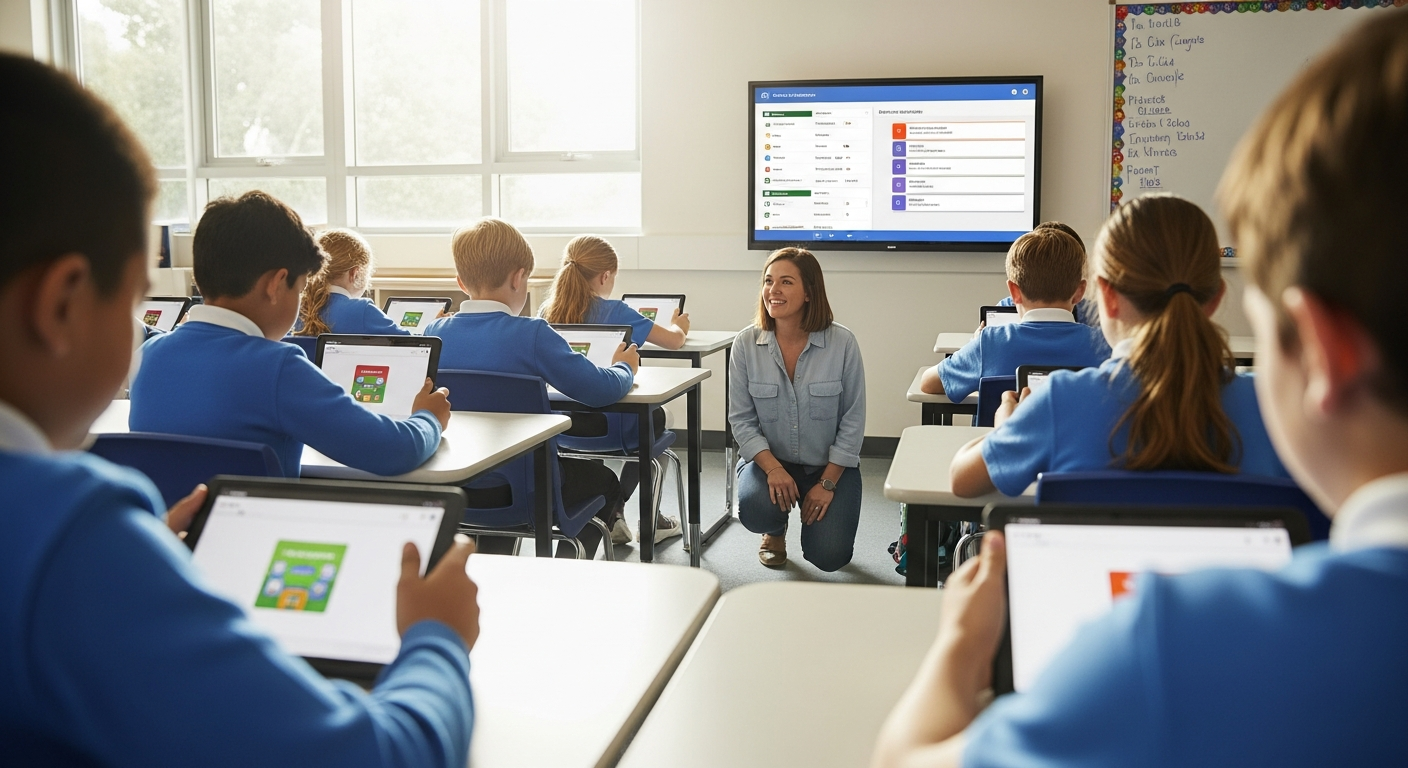
Mastering Formative Assessment: Real-Time Insights Through Interactive Activities
Discover how to move beyond rote drills with interactive formative assessment. Learn to use real-time insights to gauge student understanding and mastery effectively.

The "Shadow AI" Crisis in Canadian Schools (And How We Solve It)
Shadow AI is a legal ticking time bomb in Canadian schools. Here is how Zero-PII architecture and Canadian data sovereignty solve it.

YouTube is Betting Big on AI Games. Here's Why Schools Should Care.
YouTube's new Gemini-powered game builder validates the "Text-to-Game" concept, but here is why schools need a safe, privacy-first alternative.