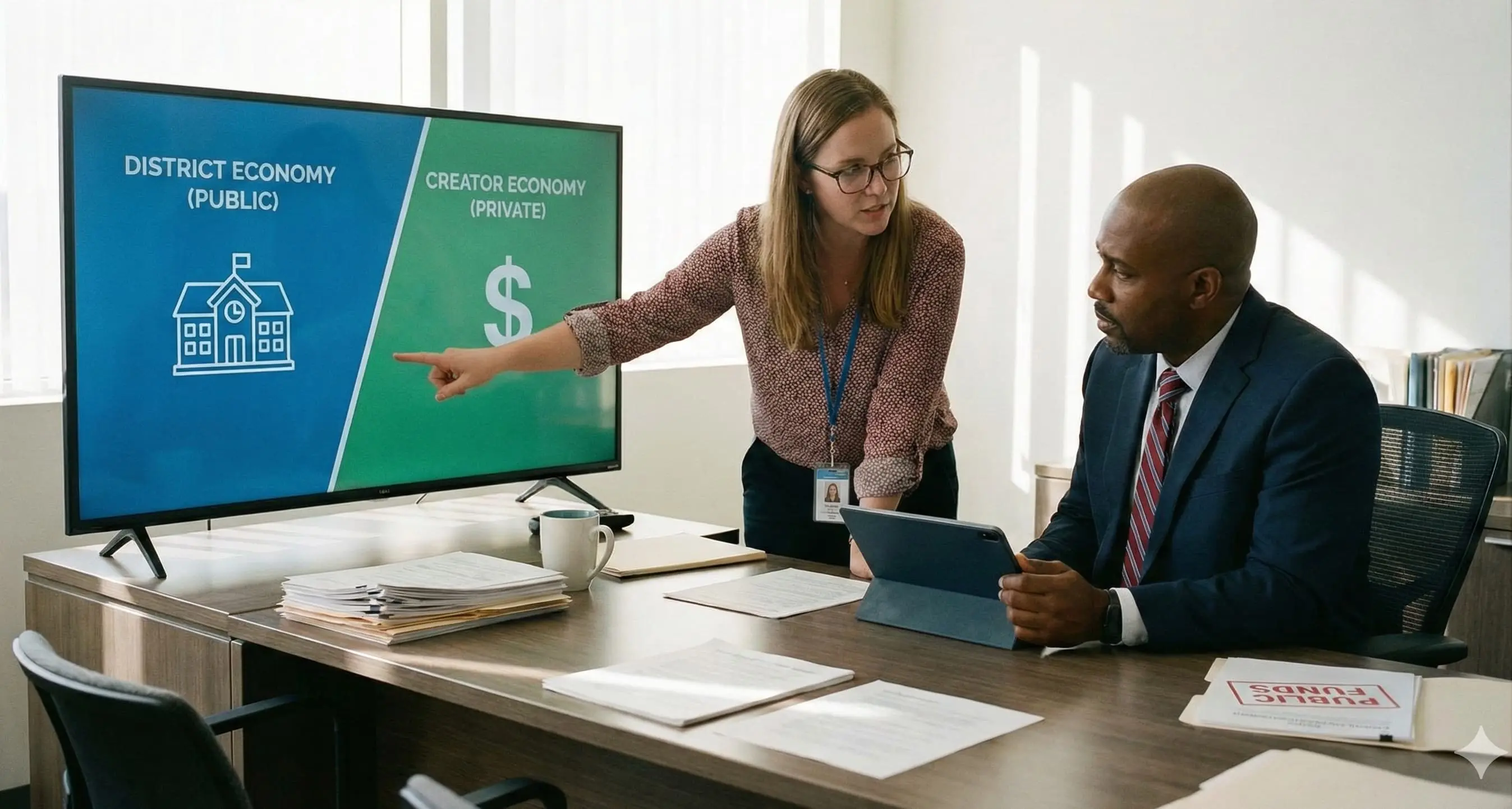

The "Double Dip" Dilemma ⚖️
For years, a tension has existed in EdTech: Teachers want to monetize their expertise on platforms like Teachers Pay Teachers, but School Boards worry about public funds being used for private profit (Conflict of Interest).
How does a District encourage innovation without "paying their own employees twice"?
Separating "Church and State"
At Argraide, we solved this by architecting a Dual Economy that respects both the public purse and the private entrepreneur.
1. The District Economy (Public)
When teachers use District Credits (paid for by the Board), the content they create belongs to the District's Internal Library. It is locked for internal use, remixable by colleagues, and strictly non-commercial. This ensures public money buys public resources.
2. The Creator Economy (Private)
When teachers use a Personal Subscription (paid for by themselves), they own the IP 100%. They can publish to the Global Marketplace and earn royalties.
Integrity by Design
This separation protects everyone. Administrators get a compliant, closed-loop ecosystem for curriculum delivery. Teachers get a safe, sanctioned pathway to entrepreneurship on their own time. It is no longer a grey area—it is a feature.