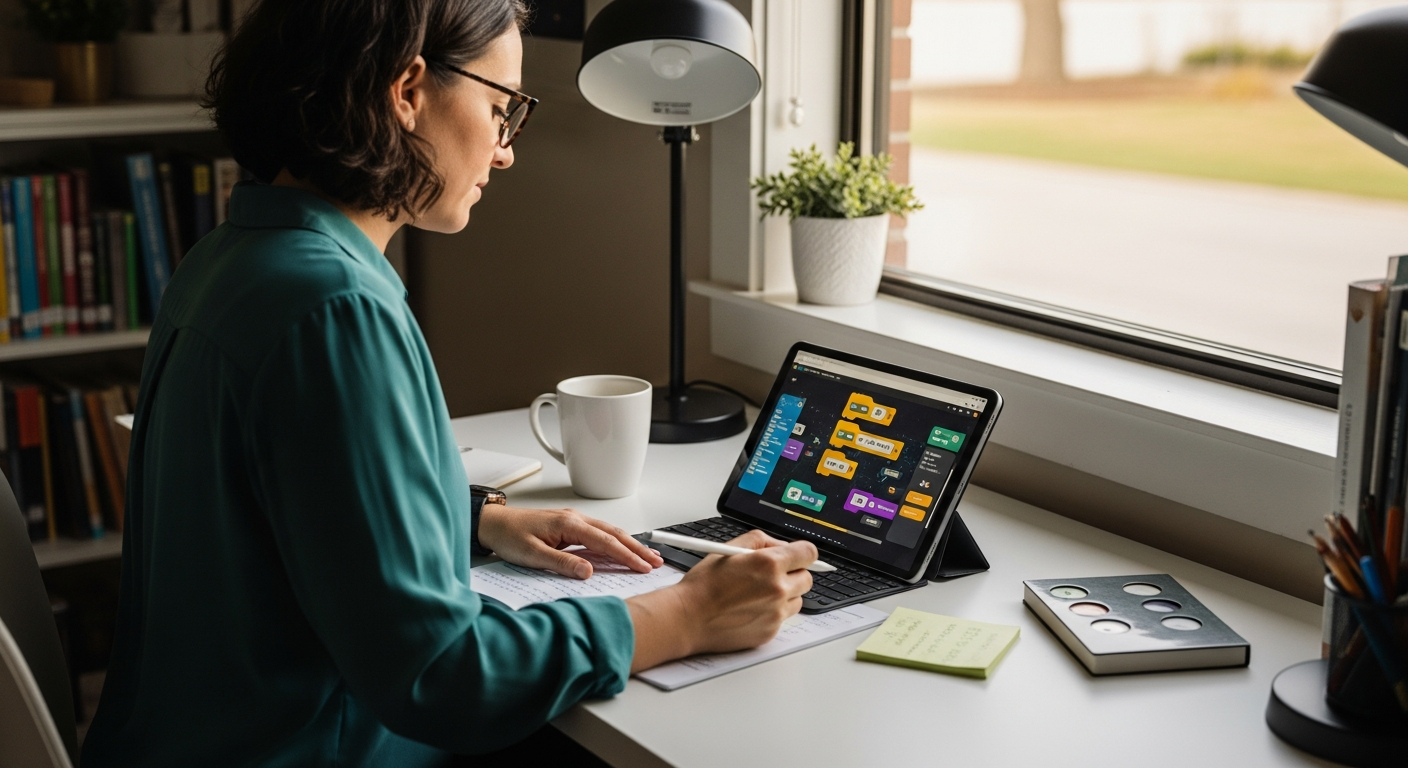

The Shift Toward the Educational Creator Economy
Many educators find themselves at a crossroads: they have a wealth of pedagogical expertise, yet they feel constrained by the limitations of traditional classroom tools. The rise of the educational creator economy has transformed this frustration into opportunity. A teacher side hustle is no longer just about selling lesson plans; it is about scaling your impact as an instructional designer. However, navigating this landscape requires more than just subject knowledge; it requires an understanding of ethical design, privacy, and effective learning science.
What is an Educational Creator Economy?
The educational creator economy is a decentralized market where individual teachers design, refine, and distribute their own pedagogical materials. Unlike traditional publishing, where textbooks undergo years of review and remain static, the creator economy allows for iterative, real-time updates based on actual student performance data.
Why Mastery-Based Gamification Wins Over Rote Drill
When developing resources for your side hustle, the methodology you choose defines your success. Many teachers are familiar with platforms like Kahoot or Quizlet, which often prioritize engagement through speed and competitive ranking. While these tools have their place, they often lean into the trap of 'dopamine loops'—rewarding students for speed rather than depth.
The Problem with Speed-Based Anxiety
If your resource rewards how fast a student clicks an answer, you are inadvertently favoring recall over understanding. According to Bloom’s Taxonomy, true learning occurs at the levels of 'Analyze,' 'Evaluate,' and 'Create.' Rote drills rarely move beyond 'Remember.'
The Power of Simulations and Tycoon Games
Modern educational designers are pivoting toward mastery-based gamification. Instead of simple flashcards, think of simulations that require students to manage resources, solve complex problems, or navigate historical scenarios. When a student plays a tycoon-style game where they must balance an ecosystem or manage a fictional economy, they are applying knowledge in a 'Zone of Proximal Development'—the sweet spot where the task is challenging but achievable with the right scaffolding.
Ethical Guidelines for the Aspiring Teacherpreneur
Building a successful teacher side hustle requires maintaining the highest ethical standards. As an educator, your brand is built on trust. Here are the three pillars of ethical creator practices:
- Data Sovereignty and Privacy: Never collect personally identifiable information (PII) from students. Modern tools allow for 'zero-knowledge' systems, such as using anonymous emoji-based lockers for student logins. If your resources require student input, ensure the data remains private.
- Human-in-the-Loop Validation: AI is a powerful assistant for drafting simulations or assessment frameworks, but it should never be the final word. A teacher must always review and validate generated content to ensure it aligns with curriculum standards and classroom context.
- Ownership and Creative Control: Avoid platforms that trap your content in a walled garden. You should own the IP you create, and the platform should empower you to refine that content based on student feedback. Look for tools that treat the teacher as a partner, not just a content vendor.
Comparative Analysis: Traditional vs. Modern Creator Tools
To succeed in the current market, it is essential to understand the difference between legacy platforms and modern, mastery-focused tools.
| Feature | Legacy Platforms (e.g., TPT, Quizlet) | Modern Creator Tools |
|---|---|---|
| Primary Goal | Asset Distribution | Pedagogy/Skill Development |
| Learning Logic | Rote Memorization/Drill | Mastery-Based Simulation |
| Engagement | Speed-based/Leaderboards | Challenge/Progression |
| Teacher Role | Passive Uploader | Active Instructional Designer |
Legacy platforms like Teachers Pay Teachers (TPT) have paved the way for the creator economy, but they often focus on static PDFs and printable worksheets. Modern teacherpreneurs are moving toward interactive, digital-first experiences that respond to how a student interacts with the material.
How to Build Your Teacher Side Hustle: A Step-by-Step Guide
If you are ready to transition from a classroom teacher to an educational creator, follow these actionable steps to ensure your products are both high-quality and sustainable.
Step 1: Identify Your Pedagogical Niche
Don't try to be everything to everyone. Focus on a specific skill or subject where students often struggle. For instance, instead of 'General Science,' create a 'Chemistry Reaction Simulator' that allows students to manipulate variables in a safe, virtual environment.
Step 2: Leverage AI for Initial Drafts
Use AI tools to brainstorm game mechanics or assessment questions. If you are building a simulation, ask the AI to map out 'if-then' scenarios that reflect real-world problem-solving. Remember: Human-in-the-loop is your safety net. You are the expert who knows what will actually work in a classroom.
Step 3: Prioritize Authentic Assessment
Move away from multiple-choice tests. Build activities that require students to demonstrate understanding. If a student can run a successful tycoon game simulation, they have clearly mastered the underlying economic concepts. This is the gold standard for mastery-based learning.
Step 4: Iterative Refinement
Your first version is rarely your best. Use feedback from your own students to tweak the difficulty level and the clarity of the instructions. The beauty of the digital creator economy is that you can update your materials instantly.
The Future of Educational Creation
We are witnessing a shift where the teacher is no longer just a content consumer, but a content architect. By rejecting the 'speed-at-all-costs' model and embracing mastery-based gamification, you can create resources that genuinely move the needle on student outcomes. Whether you are creating simulations for science or complex assessment frameworks for humanities, remember that your ultimate goal is to facilitate deep, lasting understanding. Focus on quality, protect student privacy, and continue to refine your craft. The classroom of the future is built by the teachers of today.