The New Frontier of Inclusive Education
For decades, the promise of "differentiated instruction" has been the gold standard in pedagogy, yet it remains one of the most difficult goals for teachers to achieve. In a typical classroom, a teacher might have thirty students, each with unique learning speeds, neurodivergent needs, and prior knowledge bases. Balancing these requirements often leads to the "middle-of-the-road" approach, where the curriculum is designed for the average student, leaving advanced learners bored and those requiring extra support feeling left behind. This is where the intersection of AI accessibility and instructional design is changing the game.
What is AI Accessibility in the Classroom?
AI accessibility refers to the deployment of artificial intelligence tools designed to remove barriers to learning. Unlike traditional assistive technology that merely provides a text-to-speech bridge, modern AI-driven educational environments adapt the complexity, format, and scaffolding of content in real-time. By leveraging AI, educators can finally provide personalized paths that align with Vygotsky’s Zone of Proximal Development—the sweet spot where a student is challenged just enough to grow without becoming overwhelmed.
Moving Beyond Rote Memorization: The Mastery Advantage
Many legacy EdTech tools focus on gamification through speed and extrinsic rewards. Platforms like Kahoot or Quizlet have long utilized rapid-fire quizzes to drive engagement. While effective for vocabulary recall, these tools often prioritize speed over depth. When we rely on "beat the clock" mechanics, we inadvertently penalize neurodivergent students or those who process information through deep reflection rather than rapid retrieval.
Why Mastery-Based Gamification Wins
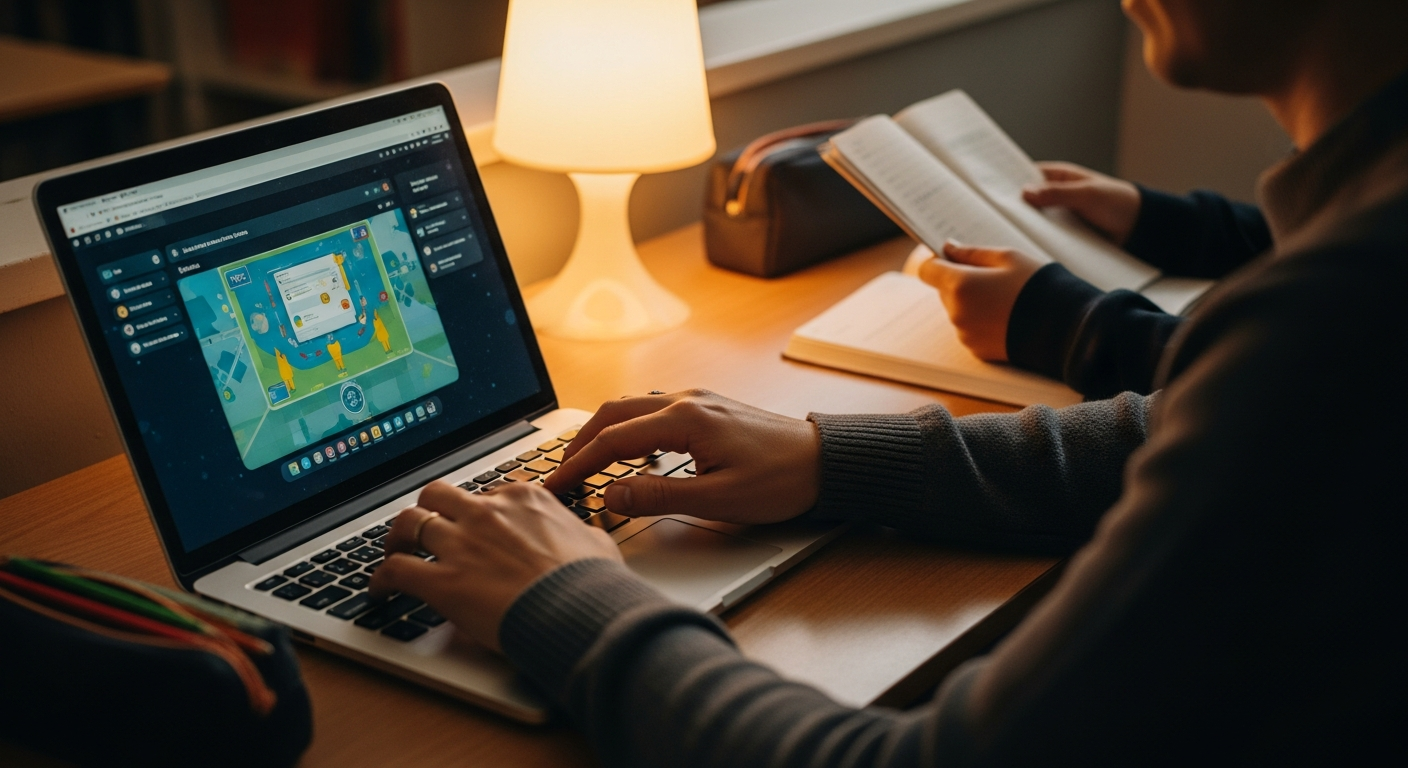
Mastery-based gamification shifts the focus from 'how fast can you guess the answer' to 'how well can you apply this concept in a simulation.' By using AI to generate tycoon-style simulations or scenario-based mastery assessments, teachers can create environments that reward demonstrated understanding.
- Authentic Assessment: Instead of multiple-choice tests, students navigate complex, AI-generated problems that mirror real-world challenges.
- Low-Stakes Failure: Simulations allow students to 'fail' safely, providing instant, constructive feedback that encourages the recursive process of learning.
- Individualized Pacing: Students progress only when they have mastered a skill, ensuring that no one is pushed forward before they are ready.
Unlike platforms like Articulate, which often require extensive coding knowledge to build complex branching scenarios, AI-driven generation allows teachers to create these immersive experiences from simple text prompts. This empowers the teacher to remain the primary architect of the learning experience, ensuring that the human-in-the-loop remains the guiding force in the classroom.
The Privacy-First Approach to Inclusion
One of the most significant barriers to the adoption of AI in schools is data privacy. Teachers are rightfully skeptical of platforms that require student PII (Personally Identifiable Information) to function. The next generation of inclusive EdTech is moving toward "zero-knowledge" privacy models, where students log in using intuitive tools like emoji-based lockers. By removing the need for email addresses or sensitive data, we create a safe digital sandbox where students can explore without the fear of their activity being commodified or tracked for commercial purposes.
Comparing Approaches to Student Data
| Feature | Traditional Platforms | Zero-Knowledge AI Models |
|---|---|---|
| Data Collection | Extensive PII required | None/Anonymous |
| Account Access | Complex logins/emails | Emoji-based/Password-less |
| Teacher Autonomy | Content is vendor-locked | Teacher owns/curates content |
| AI Usage | Black-box algorithms | Transparent/Teacher-validated |
Empowering Teacher Creators
Teachers are the greatest experts in their students' needs. When EdTech platforms treat teachers as mere consumers of pre-packaged curriculum, innovation dies. The modern accessibility revolution is about returning power to the educator. By using AI to handle the heavy lifting—such as drafting simulation parameters or creating leveled assessments—teachers gain the time to focus on what matters most: mentoring students and facilitating high-level discussions.
How to Transition to AI-Powered Inclusive Instruction
- Define the Learning Objective: Use Bloom’s Taxonomy to determine if you need a lower-level recall activity or a higher-order application task.
- Generate with Purpose: Use AI prompts to create a simulation that explicitly addresses your students' diverse needs (e.g., 'Create a simulation about urban planning that includes visual aids for English Language Learners').
- Human-in-the-Loop Validation: Always review AI-generated content. Adjust the difficulty, check for clarity, and ensure the gamification elements support mastery rather than anxiety.
- Implement and Observe: Introduce the activity. Watch how students interact with the mechanics. Are they rushing, or are they thinking? Use their feedback to refine future prompts.
Fostering True Equity
Inclusive education is not just about modifying materials for students with documented disabilities; it is about recognizing that every student learns differently. When we use AI to create simulations, we allow students to interact with the curriculum through their own strengths. A student who struggles with abstract reading might excel in a visual resource-management simulation. A student who experiences test anxiety thrives in a mastery-based, non-timed environment.
By prioritizing authentic learning over rote drill, we move the needle from simple 'access' to 'inclusion.' We stop asking students to adapt to a broken system and start using technology to build a system that adapts to the student.
Conclusion: The Path Forward
As we look toward the future of education, the goal is clear: utilize technology to amplify the human connection between teacher and student. The AI accessibility revolution is not about replacing the teacher with an algorithm; it is about providing teachers with the tools to build a more equitable, engaging, and personalized classroom for everyone. By embracing mastery-based gamification, prioritizing privacy, and keeping the teacher at the center of the design process, we can ensure that the next generation of learners has the foundation they need to succeed in a complex world.