Ontario Grade 7 Science
Matter and Energy, Strand C
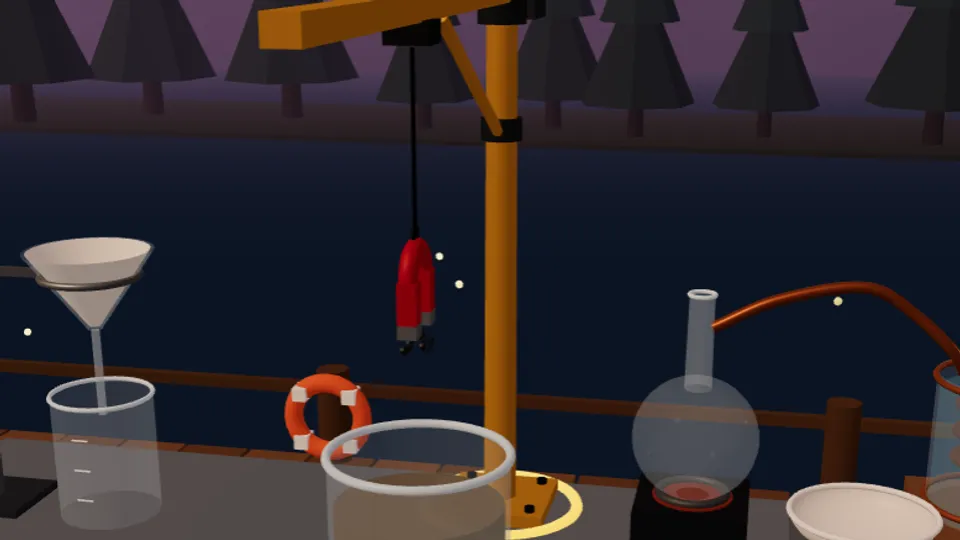
Four From One: The Separation Challenge

A projector lab at a shoreline field station. One jar holds sand, salt, iron filings and water. The class tests each separation process (magnet, filter, evaporation, distillation), sorts the whole jar one step at a time, plans the order for new jars, then spots each process in real Ontario jobs.
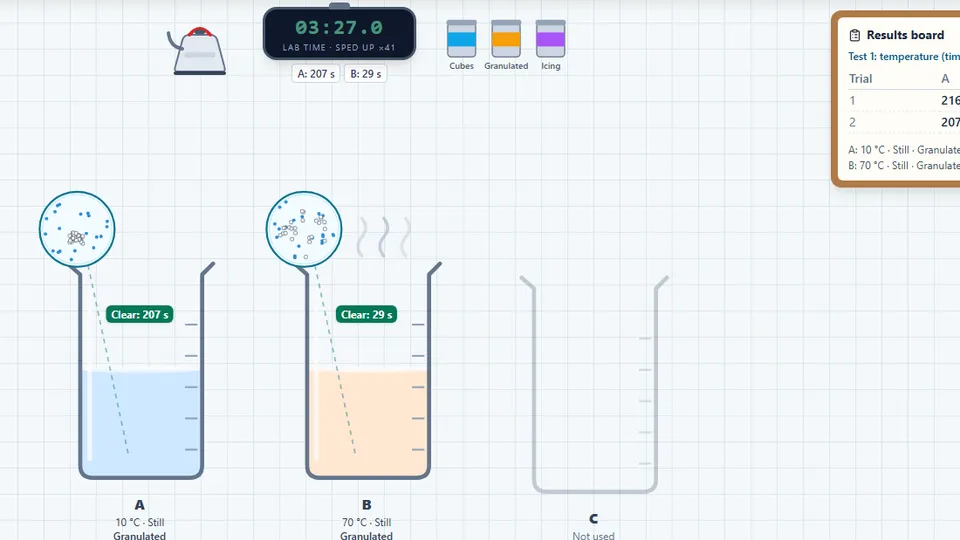
A 2D test bench with three identical beakers, a big digital stopwatch and a results board. Students design fair tests with sliders (water temperature, stirring, sugar cube / granulated / icing sugar), predict the winner, race the sugar three trials at a time and read their own results board to compare the times. They explain each result with a particle view, then use test tubes to find that stirring and piece size change how fast sugar dissolves but only temperature changes how much can dissolve.
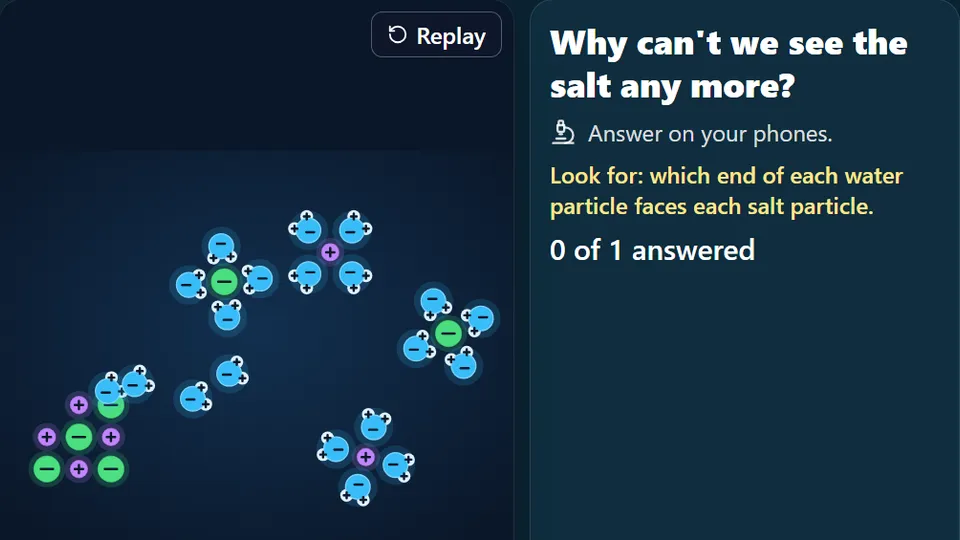
A live class lab: phones predict whether each substance dissolves, the big screen tests it in a glass tank and dives into the particles, and the class explains it with the charged ends of water particles, then applies the pattern to new jars and to the universal solvent.
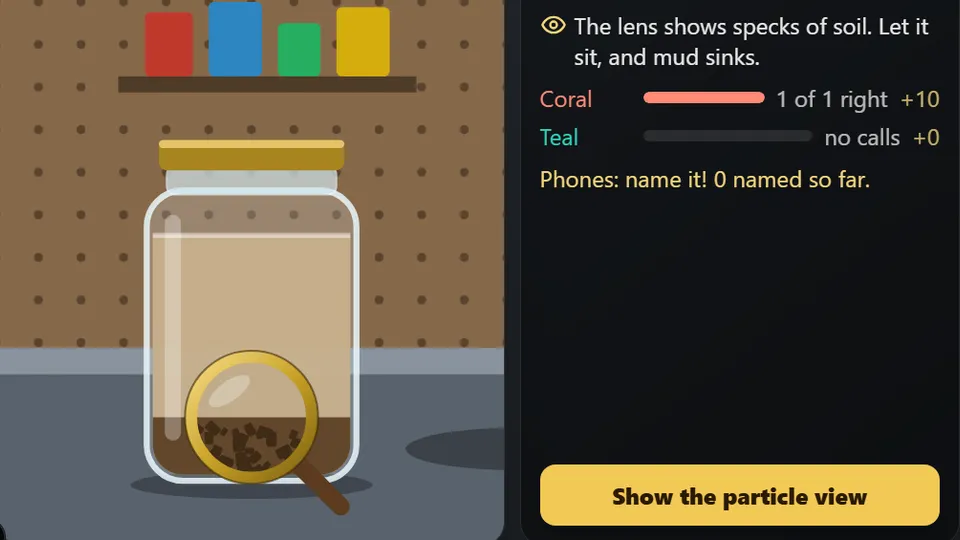
Two teams test 13 mystery mixtures from the kitchen, the garage and the lab with a brass lens on their phones, call each one homogeneous or heterogeneous from the evidence, then name it as a solution or a mechanical mixture with the particle view.
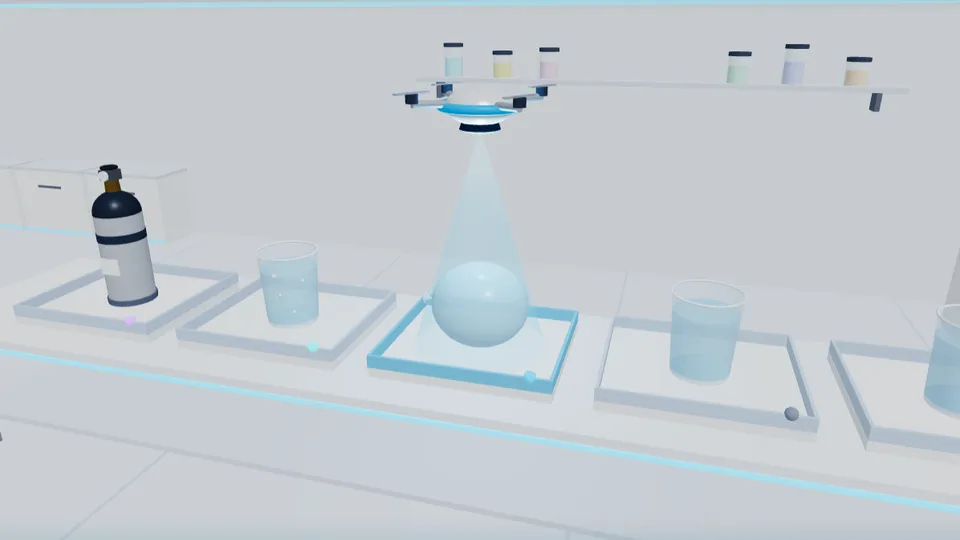
A clean white nanotech lab in soft blue light. A hovering lens drone dives from everyday samples on their trays (a balloon of air, a spoon of table salt, a gold ring, tap water) down to their particles, then into one particle. Students predict from the outside look, dive in, and sort each sample by what the particles show: pure substance or mixture, then element or compound.
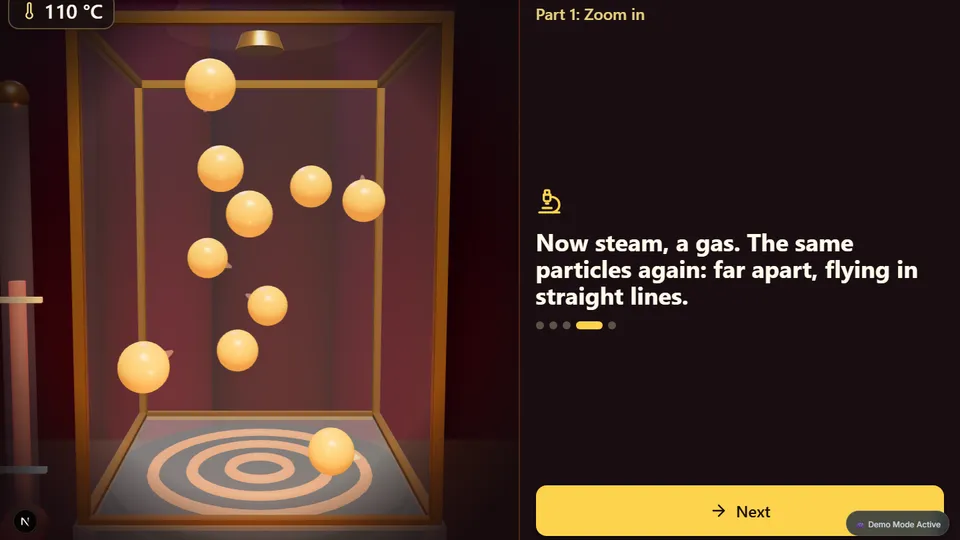
A projector simulation: the camera dives from ice, liquid water and steam down to their particles. The class predicts what heating will do, watches the particles react, then explains the result with the particle theory.
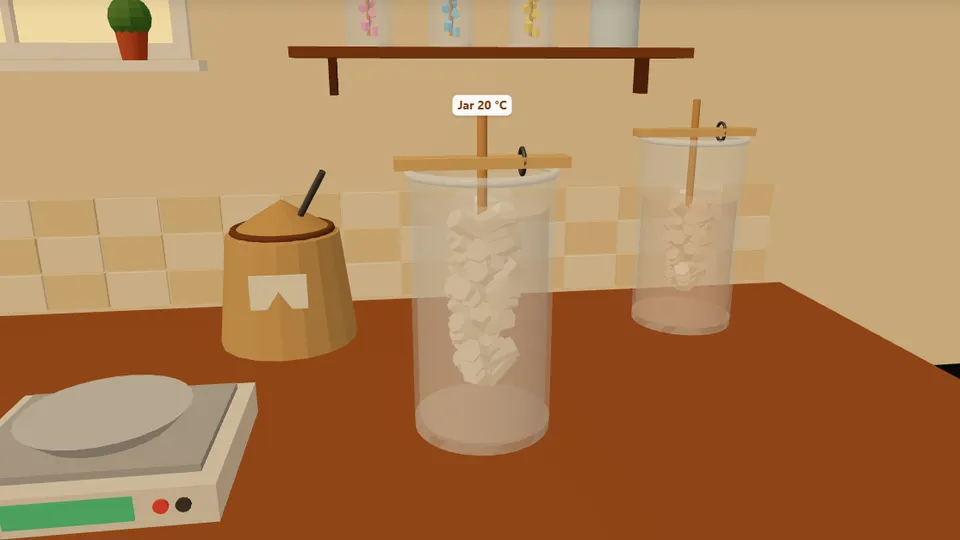
A 3D candy-workshop lab on fast-forward. Students heat water in a copper pot, pour sugar and stir until some stays on the bottom, weigh the leftover on a digital scale and work out the concentration of the saturated solution in grams per 100 mL. They repeat it at 40, 60 and 80 °C as a fair test, test whether stirring changes how much dissolves, explain the results with a particle view, then cool hot syrup so rock candy grows on a stick in a jar.
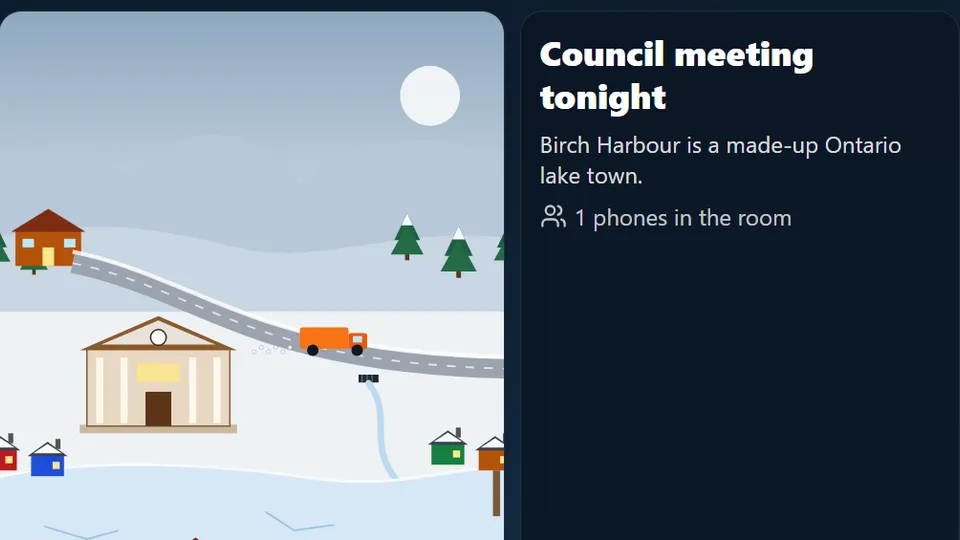
Lakeside Council: Salt, Plastic and the Drain
A live council session for a made-up Ontario lake town. Every phone uses evidence to work out what road salt, microplastics and household chemicals do to Loon Lake and its people, then the class votes on plans that play out on the big screen.